
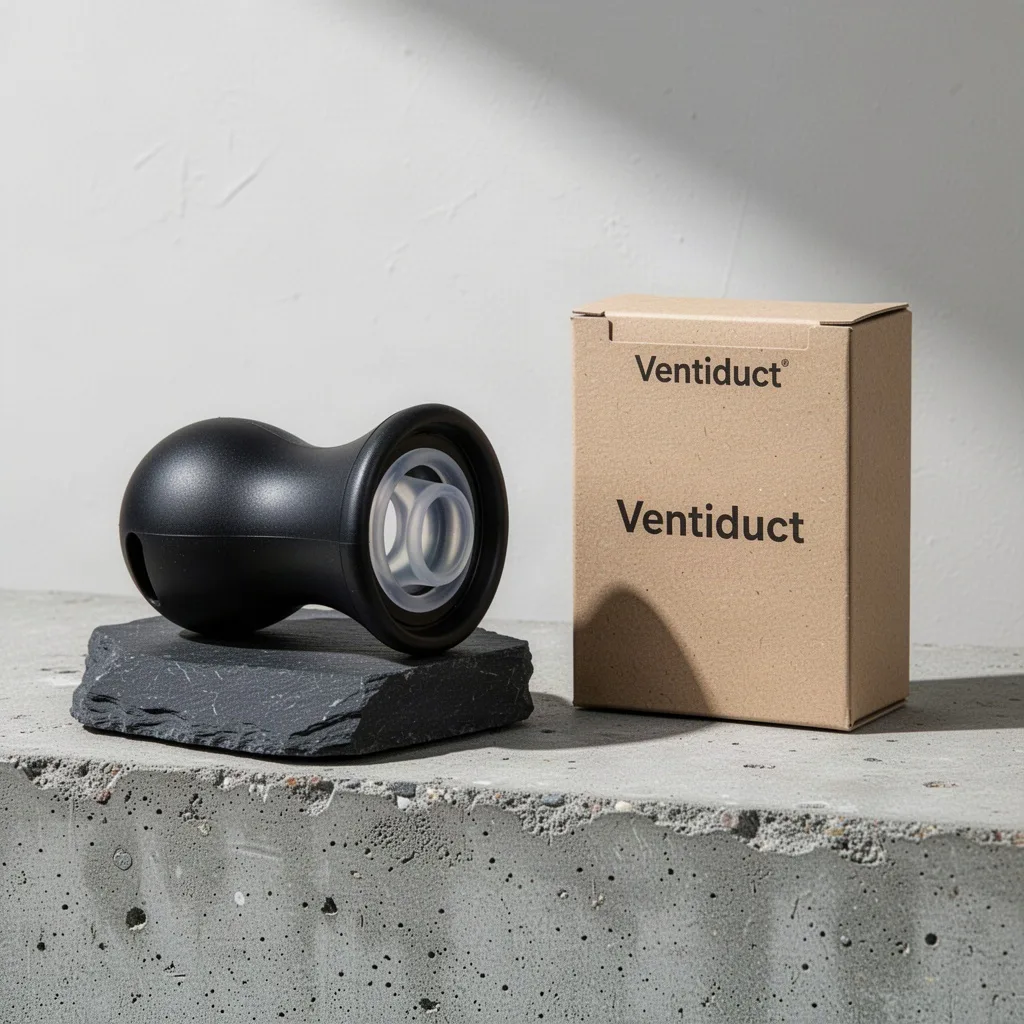
Ventiduct E-2 Gradual Expiratory Regulator
Mechanical backpressure valve for expiratory phase control and chest emptying management
€69€49
- 1 expiratory pressure regulator, 1 pre-installed synthetic diaphragm, protective kraft box
- Chassis made of ABS thermoplastic polymer with micrometric exhaust ports
- Reactive synthetic elastomer membrane for diaphragms with uniform elastic response
- Progressive adjustment thread that modulates backpressure without sudden jumps
- Protective outer box made of recycled kraft cardboard without synthetic inks
Ventiduct E-2 Gradual Expiratory Regulator
Select the set suited to your frequency of use
Express 1-Click Order (Name + Phone)
Selected Package: 2 complete regulators (€89)
Returns within 30 days
Customers have 30 days after delivery to arrange a return under our policy. Simply send a message to our technical department.
Mechanical cycle of the elastic membrane at four points
Airflow intake
The user blows air into the tubular cavity made of thermoplastic ABS polymer.
Elastomer resistance
The synthetic diaphragm offers deformable mechanical resistance before allowing air to exit.
Regulated release
Air is expelled through calibrated perimeter slots that cushion thoracic decompression.
Return to zero point
The elasticity of the elastomer returns the valve to its initial resting position for the next cycle.
Protocol for conscious chest emptying
Perform ten slow exhalations before your routine, focusing on the sensation of even contraction in the lower abdominal wall.
Perform fifteen cycles after finishing aerobic training to promote a calm, controlled breathing rhythm.
Avoid pressing your lips too hard against the mouthpiece so the perioral muscles stay relaxed during airflow release.
Industrial construction compared to simple disposable valves
The drawback of exhalations without brake or resistance
Fast, uncontrolled expulsion of air often causes early collapse of the smaller airways and shallow breathing. The use of improvised resistances tends to generate abrupt pressure increases that fatigue the neck muscles.
The cushioned response of the calibrated Ventiduct diaphragm
The combination of synthetic elastomer and millimeter-precise exhaust ducts ensures the pressure curve stays linear. This prevents mechanical overload in the oral cavity during exhalation.

Marta Soler
Specifically training the exhalation phase provides remarkable control over ventilatory tempo. The purely mechanical simplicity of this regulator means there is no need for batteries, and it calibrates with absolute consistency.
Component quality and absence of leaks
Conditioning and transport
The regulator is delivered sealed in a protective kraft recycled cardboard box. Shipments are protected from external tampering with individual technical seals.
Technical operating details and commercial policies
What is the purpose of expiratory resistance? +
The device generates graded resistance when the user exhales, which prolongs exhalation time and allows methodical training of expiratory muscle coordination.
Can it be used simultaneously for loaded inhalation and exhalation? +
No, the E-2 model is designed specifically for the expiratory phase; air intake occurs with minimal resistance through a secondary channel to protect the synthetic diaphragm.
What are the return conditions? +
You have a 30-day period from delivery; the item must remain unused and in its unopened original kraft packaging, with the buyer covering shipping costs unless a proven defect is demonstrated.
What payment methods are accepted? +
We only accept cash on delivery upon receipt of the shipment and direct bank transfer.
Direct testimonials on daily use
"The thread allows for very gradual regulation, and the inner elastomer material gives a pleasant cushioning feel when blowing. It disassembles completely to dry out condensation without any difficulty."
 Felipe N.
Customer